





STEAM STATISTICS
Player activity
Highest concurrent Steam player count in each hourly interval. All times UTC.
Player insights
AT A GLANCERecent popularity
Peak concurrent players yesterday (UTC).
Activity trend
Average hourly peaks vs. the previous 24 hours.
Busiest hour
462 players at the average hourly peak.
Monthly average
November 2026 · average concurrent players.
HISTORICAL DATA
Monthly player history
Compare average concurrent players and recorded peaks. The current month is still in progress; “Last 30 Days” is a rolling window.
| Month | Avg. players | Gain / loss | Change | Peak players |
|---|---|---|---|---|
| Last 30 Days | 389.3 | 0.0 | 0.0% | 876 |
| November 2026 | 389.3 | 0.0 | 0.0% | 876 |
Latest available data · Nov 27, 2026, 19:22 UTC
STREAMING
Twitch audience
Viewers watching streams of Go Next!. This audience is measured separately from players.
Latest available data · Nov 27, 2026, 19:00 UTC
SEARCH TRENDS
Search interest
Relative interest on a 0–100 scale. Search scores describe attention, not the number of people playing.
Latest available data · Nov 11, 2026, 01:06 UTC
CONTEXT MATTERS
What the numbers tell you
Steam, Twitch and Google measure different kinds of activity. Compare each signal over time to understand how interest in Go Next! is changing.
How ActivePlayer collects dataHow many people are playing right now?
378 concurrent Steam players were recorded in the latest available update. Check the timestamp beside the count for freshness.
How often do the numbers refresh?
The live count checks for updates every five minutes while this page is open. Monthly history and search interest update less frequently. If a feed is unavailable, the last available figures remain visible with their timestamp.
Why might a chart show a gap?
A gap means a measurement is missing. It does not mean zero players, zero viewers, or zero search interest. Newly released games may have only a short history.
The game behind the numbers
About Go Next!
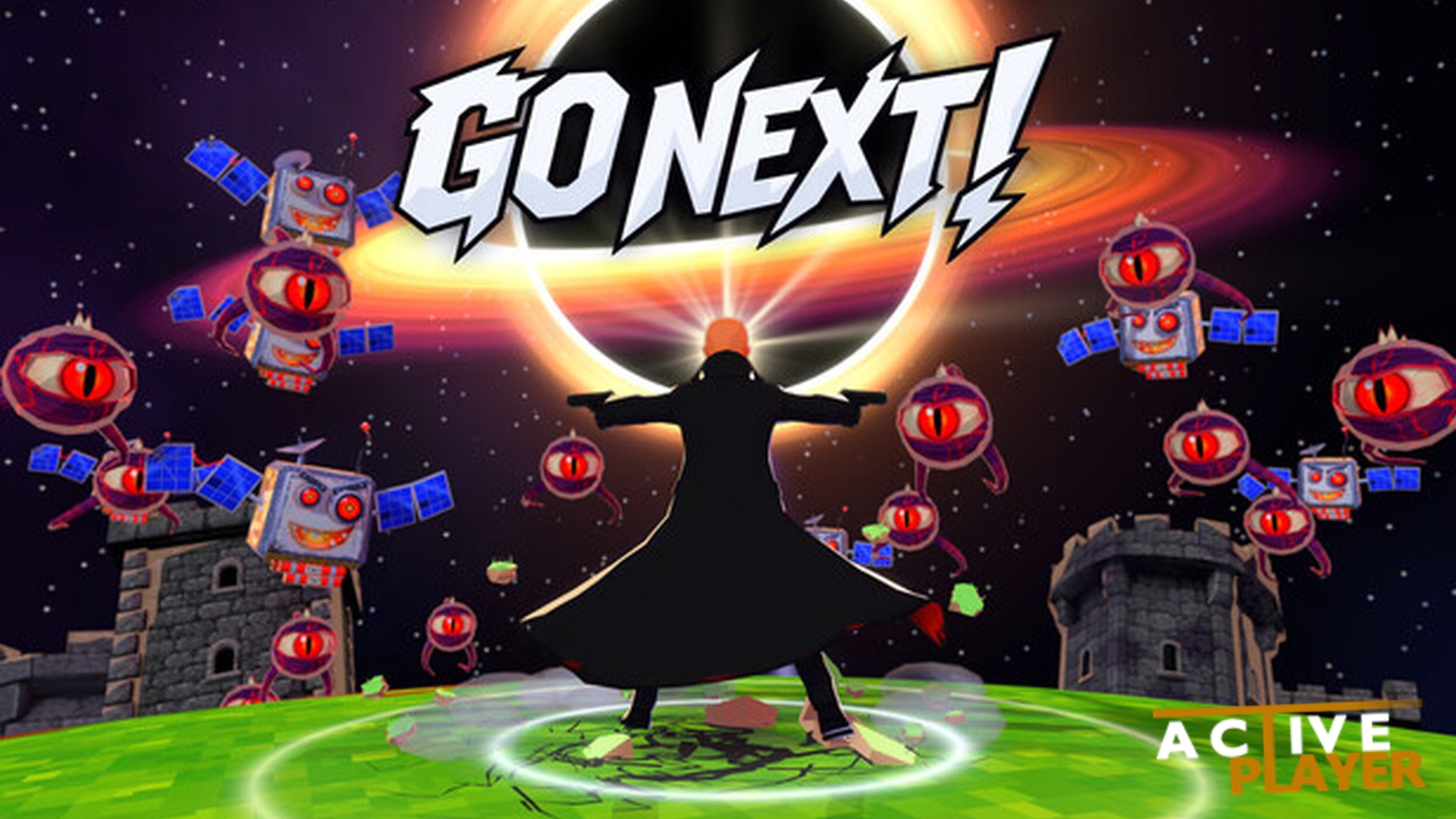
Go Next! combines automatic weapon fire with deliberately active movement. Mixidev develops and publishes the third-person horde survivor, where surviving a run involves moving through the environment while weapons handle their firing patterns.
Movement creates the route through a run
Wall-running, climbing, vaulting, sliding and dashing provide ways to navigate pressure from the horde. Level-up cards, weapons and items shape the build, while shrines, cursed chests and other map objectives give movement a purpose beyond keeping distance from enemies.
Resources expand the options available between attempts. Players can take on the game alone or in online co-op with up to four participants. Ranked seasons and Steam leaderboards add score comparisons, although a leaderboard entry describes an achievement rather than a person currently playing.
Go Next! player count: reading the activity
The Go Next! player count combines solo and cooperative Steam sessions. It does not separate groups by size, show who is actively moving or count the number of joinable runs. Automatic firing is a combat system; it does not mean that every session is an unattended one.
Changes in concurrency can be considered alongside new build options or ranked-season activity, without assuming that a chart change has a single cause. Compare equivalent time windows when evaluating the audience. Monthly unique players, leaderboard participants and Twitch viewers are different populations and should not be folded into the live Steam total.
Related player statistics
Risk of Rain 2 player statistics offer another action roguelite audience built around item combinations and repeated runs. Go Next! places a distinct emphasis on parkour movement alongside automatic weapon fire.
Game profile
- Developer: Mixidev
- Publisher: Mixidev
- Format: Third-person horde survivor with solo and up to four-player online co-op
Game details: Go Next! on Steam. Player-count interpretation by ActivePlayer.
