








Would you spend your Clash Royale upgrades on a deck that won 65.4% of its games, or one that won 51.9%? Before picking the higher number, look one column to the right. The Graveyard–Freeze list appeared in 81 battles. The Minion Giant list appeared in 669. Which cards you already own and how you like to defend can matter more than the gap between those percentages.
For Supercell’s King vs. King season, we picked three lists that teach different ways to take a tower. All three come from the November 20 edition of ElixirDeck’s top-200 Ranked analysis. It drew on 4,558 battles from the global Ranked leaderboard and counted decks from both sides. The site refreshes daily, so the date matters if you share these numbers with your clan.
| Deck in the top-200 sample | November 20 result and reason to try it |
|---|---|
| Minion Giant | 51.9% across 669 battles. Build a counterpush behind surviving defenders. |
| Goblin Barrel and Wall Breakers | 61.7% across 175 battles. Draw out a cheap spell and put pressure on the opposite lane. |
| Graveyard and Freeze | 65.4% across 81 battles. Turn one defended push into a timed spell attack. |
Play Minion Giant if you like to defend before committing
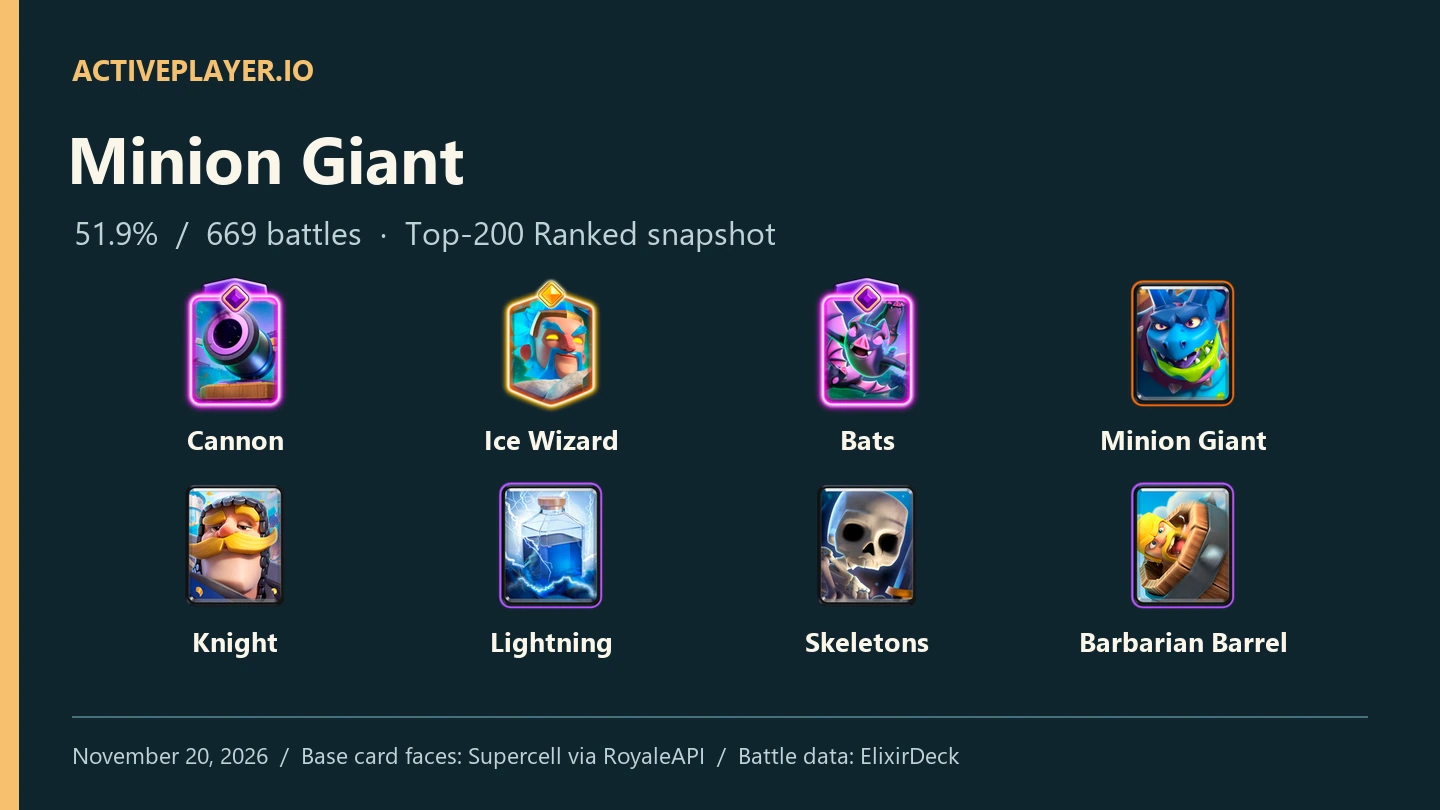
The eight cards: Evolution Cannon, Hero Ice Wizard, Evolution Bats, Minion Giant, Knight, Lightning, Skeletons and Barbarian Barrel. The illustration shows the base card faces. The names here identify the special slots in the observed list.
Start a practice match by keeping Cannon available for a threat aimed at your tower. See what survives the defense before spending another four elixir on Minion Giant. A surviving Ice Wizard or group of Bats gives the opponent another problem to solve as the fight crosses the bridge. When considering Lightning, look at where the defending troops, building and tower stand. Spending six elixir to hit an isolated cheap defender leaves much less for your next defense.
Replay check: pause after your first failed push. Did the opponent stop the Minion Giant efficiently, or did you spend your defensive cards before they counterattacked? Those need different fixes. Changing the spell is an option, too. ElixirDeck recorded a Fireball version separately, so carry over the play pattern and treat its win rate as a new comparison.
Supercell’s TV Royale introduction to Minion Giant and Hero Ice Wizard shows the cards in action. It was released before Season 89. The win rates here come from the November battles above.
Play Goblin Barrel bait if you enjoy choosing the other lane
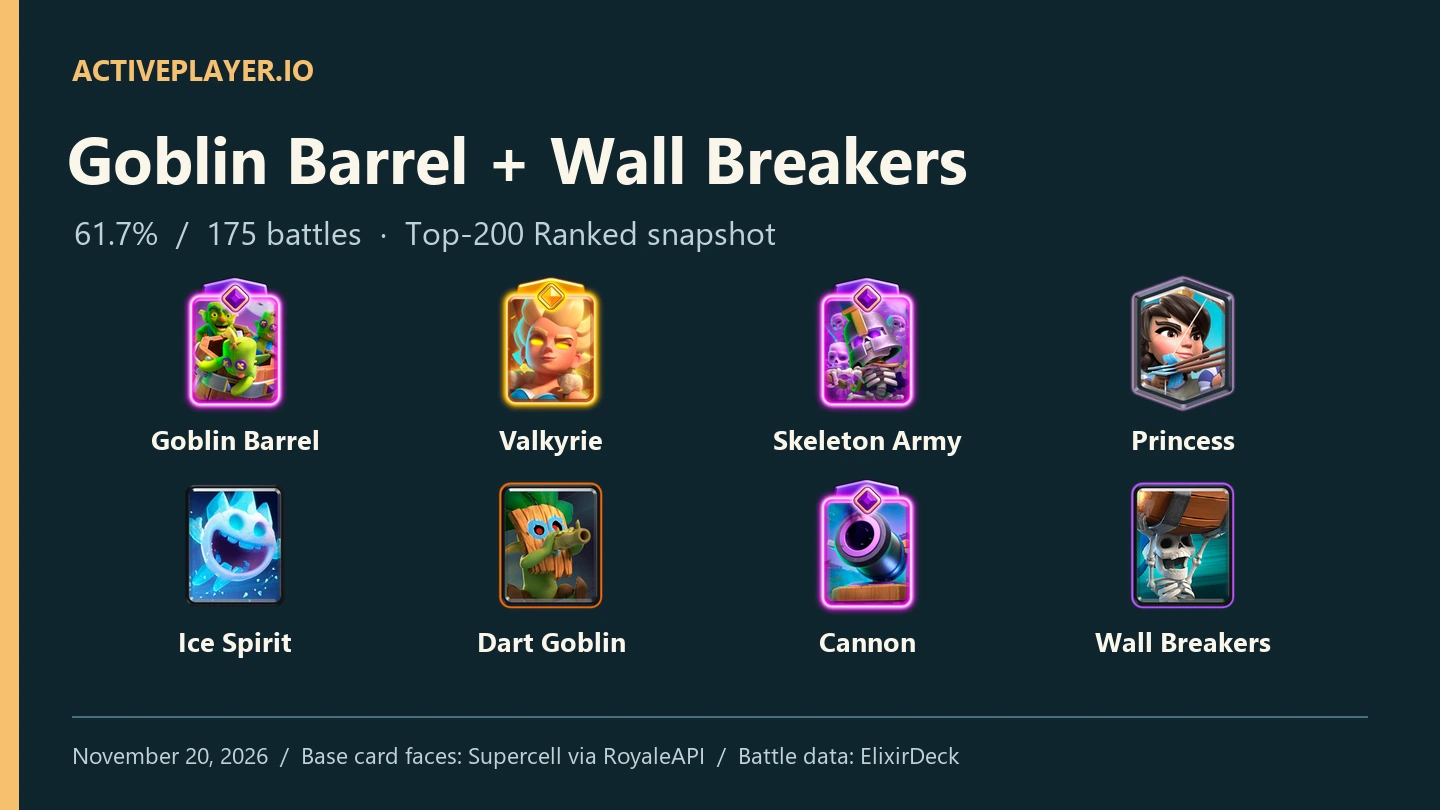
The eight cards: Evolution Goblin Barrel, Hero Valkyrie, Evolution Skeleton Army, Princess, Ice Spirit, Dart Goblin, Cannon and Wall Breakers. The two tower threats let you make the opponent show which answer they want to save.
Watch the first time the opponent uses a cheap spell. If they use The Log on Princess, try a Barrel while that answer is out of hand. If they keep a small spell ready for every Barrel, pressure the opposite lane with Wall Breakers while you can still defend. Sending both threats at once without tracking their spell can give them two cheap defenses and leave you chasing the next push.
Replay check: find your first Barrel that dealt almost no damage. Had you already seen the spell that stopped it? Write down which card could have drawn that spell out first. That observation is more useful for your next match than copying a different list after one loss.
Play Graveyard–Freeze if you can wait for the tower to lock on
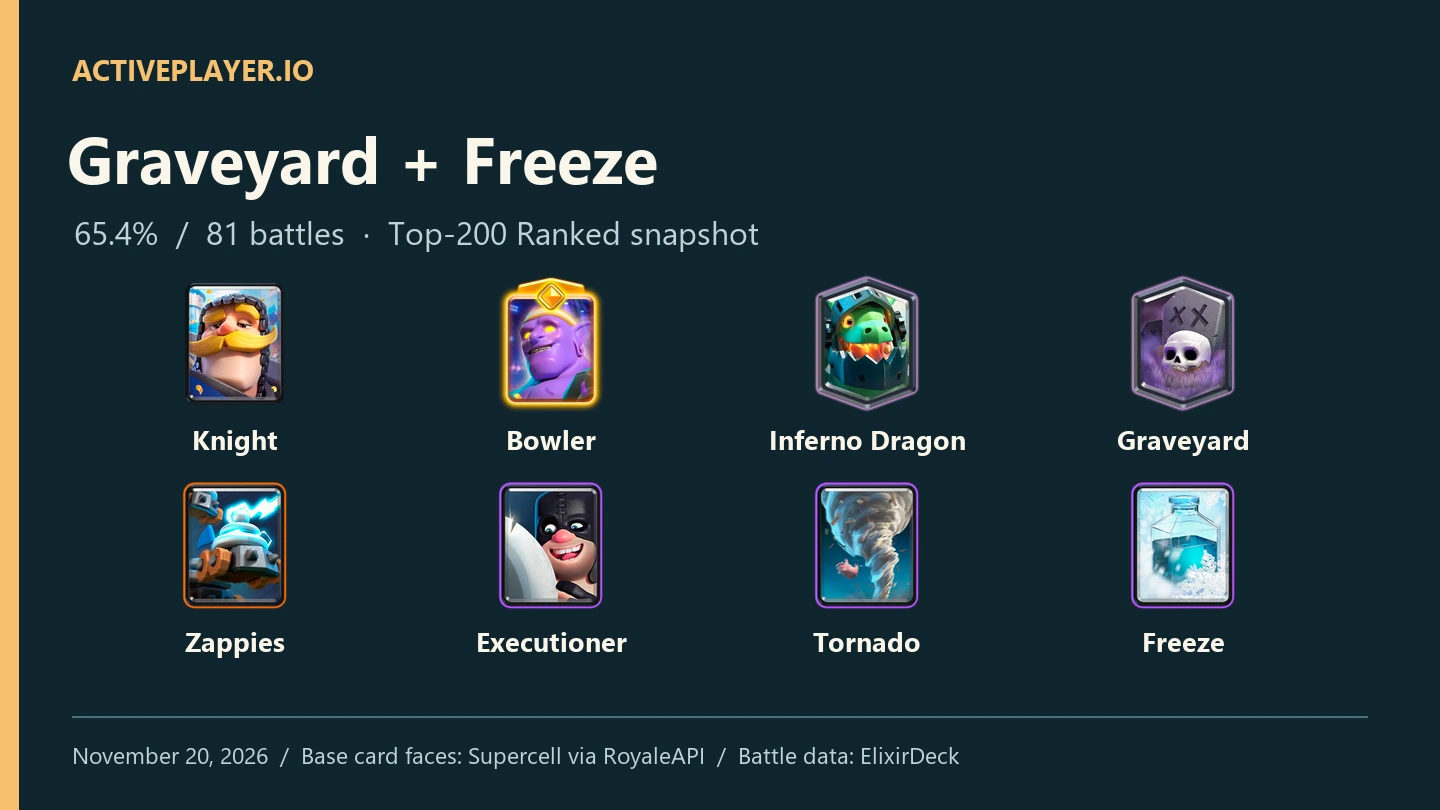
The eight base cards: Knight, Bowler, Inferno Dragon, Graveyard, Zappies, Executioner, Tornado and Freeze. Defend first. A surviving Knight or Bowler can occupy the tower while Graveyard’s Skeletons appear. Watch where the opponent places their answer before deciding whether Freeze will buy useful time. Precasting it gives the opponent the chance to defend outside its area.
Replay check: watch the moment you cast Graveyard. If the tower is free to target the Skeletons and you have little elixir left, saving Freeze may be the better recovery. In an 81-battle sample, changing one result would move a simple win rate by about 1.2 percentage points. That gives some perspective on how much confidence to put in that top spot.
Try the deck you can judge fairly
Start with the list whose tower threat and core defense you can field at your normal card levels. Play a short set with it and review the same decision each time. If you swap out a Hero or Evolution, record which slot changed. The new version may suit your collection, but its results no longer belong to the eight-card setup in the table. Before committing Gems, see ActivePlayer.io’s guide to Clash Royale collection milestones to see which rewards your existing cards can unlock.
This independent guide is unofficial and is not endorsed by Supercell. Card artwork belongs to Supercell and is displayed via RoyaleAPI. Supercell’s Fan Content Policy

